The Rise of "Zipping It"
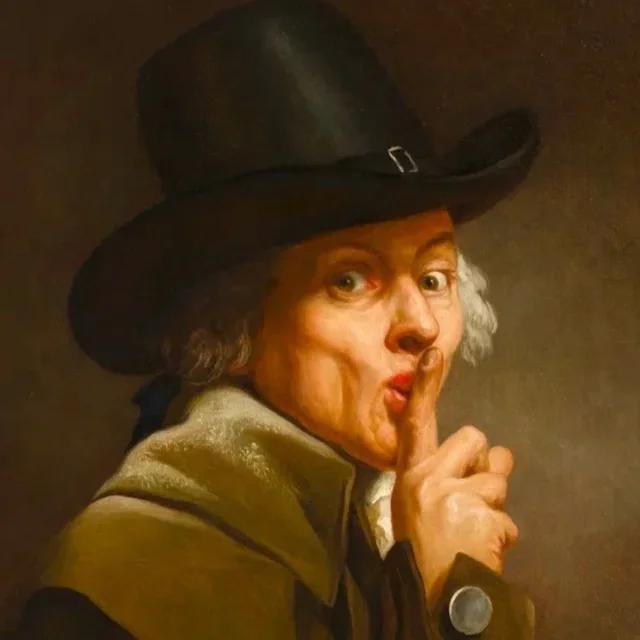
I remember the first time I nicked myself on the double-edged sword of self-censorship.
I was in elementary school and the popular kids were picking on the usual suspect — a boy they regularly demanded perform Chunk’s “truffle shuffle” from The Goonies. Every time it happened, I winced. But even as the words of protest rose in my throat, I kept silent (even worse, I laughed along). This and similar moments taught me that self-censorship is a strategy for social acceptance — one which secured me a seat at the literal and metaphorical lunch table — as well as cheek reddening self-alienation.
Self-Censorship (noun): The exercising of control over what one says and does, especially to avoid castigation.
But in the fraught world of today, self-censorship has become a strategy not just for social acceptance, but for existential self-preservation. Politicians and tech CEOs muzzle themselves in the presence of a president. Influencers and celebrities manage their personas to appease algorithms and egregores alike. Academics and researchers blunt or veil findings that don’t meet the social agenda of the moment. And everyday people feel increasingly compelled to run their self-expression through a kind of moral spellcheck that corrects them according to what Heidegger called the they, Nietzsche the herd, Kierkegaard the crowd, and Ortega y Gasset the mass man.
"Unpopular ideas can be silenced, and inconvenient facts kept dark, without the need for any official ban... Anyone who challenges the prevailing orthodoxy finds himself silenced with surprising effectiveness. A genuinely unfashionable opinion is almost never given a fair hearing, either in the popular press or in the highbrow periodicals."
—George Orwell
A paper published in Oxford’s Political Science Quarterly found that as of 2020, 46% of Americans report feeling less free to speak their minds than they used to.1 Curiously, only 13% reported this feeling in 1954 at the height of the Red Scare, when one’s views could land them in jail. This rise in self-censorship is attributed to greater levels of affective political polarization (translation: how pissed we are about our differences), increased social media usage (a visible and often permanent form of expression in which one can face the wrath of the entire internet), and the rise of populism (the belief that “the man” holds one down and suppresses one’s truth).2
“The worst evil is… self-censorship, because that twists spines. That destroys my character because I have to think something else and say something else. I have to always control myself.”
—Milos Forman
Censorship has even managed to infiltrate spaces historically devoted to the pursuit of objective truth, like academia. A University of Pennsylvania study found that nearly all psychology professors report worrying about social sanctions if they express their personal beliefs, and report more self-censorship around controversial or taboo research findings.3 Similarly, a Harvard report found that heterodox scholars (those who see themselves as out of step with their department’s prevailing views) are significantly more likely to self-censor and hesitate to share controversial views across teaching, research, social media, and public discourse.4 This approach has been taken up by students as well: In an opinion piece, researchers at Northwestern University revealed that students self-censor their beliefs across a range of topics (78% on gender identity, 72% on politics, 68% on family values), with 80% of students submitting classwork that misrepresented their views to align with professors.5
“Censorship is the tool of those who have the need to hide actualities from themselves and from others.”
—Charles Bukowski
In a world where more people than ever spew their thoughts about for all to hear, I realize these findings may seem paradoxical: Are we sure the problem is too much self-censorship rather than too little? This apparent disconnect is well explained by the spiral of silence theory. As the theory goes, a loud minority can create the illusion of majority opinion, leading the actual majority to believe they are alone in their views and, consequently, to censor themselves. This phenomena underpins the sense that you are “taking crazy pills” for holding what you believe to be reasonable views. A case in point, research has found that strong liberals are the least likely to self-censor, followed by strong conservatives, with the majority in the middle being much more likely to self-censor.6 So yes, some people aren’t censoring themselves — and they happen to be the most extreme.
“Unmeasured vituperation employed on the side of the prevailing opinion, really does deter people from professing contrary opinions, and from listening to those who profess them.”
—John Stuart Mill
But even with the strange pressures of our modern world, it can’t possibly be that hard to speak one’s mind freely, right? Eh, no, it is that hard. Philosophers and psychologists have long understood that to express oneself authentically requires immense courage (see: Rollo May’s The Courage to Create7 and Erich Fromm’s Escape From Freedom8). To express oneself honestly is to risk being disliked, criticized, or misunderstood. As May and Fromm lament, this prospect of rejection is far too terrifying for most people, leading most to silence themselves or abandon their individuality entirely. By contrast, those who express their views genuinely — especially when those views contradict prevailing opinions — are often those who have cultivated certain psychological strengths, like resilience, determination, flexibility, critical thinking, and autonomy.
“The mass crushes beneath it everything that is different, everything that is excellent, individual, qualified and select.”
—José Ortega y Gasset
But the pressures of our modern world may be eroding the very strengths that underpin the ability to be true to ourselves in the first place. No fewer than 57.6% of young people in the U.S. now meet the threshold criteria for Social Anxiety Disorder, which is defined as an intense fear of being watched, judged, or embarrassed in social situations.9 Over the past two decades, we have declined in our need for uniqueness(the need to express oneself and be unique from others), particularly in terms of not wanting to defend our beliefs publicly and caring more about what others think about us.10 And provocative new data (which needs further research) suggest that among young people, neuroticism has increased, while conscientiousness, extraversion, and agreeableness have declined.11 The maladaptive changes are linked to the including lingering effects of the COVID-19 pandemic, increased smartphone and social media use, rising loneliness and social isolation, and chronic exposure to the world’s horrors.
“If you do not express your own original ideas, if you do not listen to your own being, you will have betrayed yourself. Also, you will have betrayed your community in failing to make your contribution.”
—Rollo May
It’s important to note that it’s normal, nay healthy, to self-censor in certain contexts. One should not reveal one’s sexual fantasies to one’s boss, nor become politically confrontational at a baby shower. Such acts of self-censorship do little to damage our personhood — and perhaps even cultivate self-regulation (many in today’s world conflate authenticity with doing and saying whatever one wants). Instead, self-censorship becomes toxic when we refrain from expressing that which is integral to our sense of humanity. In its most severe form, self-censorship can give rise to what Erich Fromm called automaton conformity, a state in which we become so alienated from ourselves that we mistake our compliance for freedom.
“The person who gives up his individual self and becomes an automaton, identical with millions of other automatons around him, need not feel alone and anxious anymore. But the price he pays, however, is high; it is the loss of his self.”
—Erich Fromm
Look, the reality is, I don’t have any brilliant solutions to fix the self-censorship scourge (ask me in 3 years when I’m done with the PhD). But I do have a couple thoughts to get us started:
1. Put yourself through a self-inflicted philosophy crash course.
Philosophers have all things conformity, individuality, and censorship on lock — and reading their work will sober anyone up real quick. If you don’t want to read the books, this is actually a really healthy use case for ChatGPT.
Key terms:Authenticity, automaton conformity, herd morality, bad faith, self-censorship, self-alienation, congruence, self-actualization, individuation, will to meaning, existential anxiety, mass man, the they, pseudo-individualism, ownmost possibility
Key people:Rollo May, Erich Fromm, Carl Rogers, Abraham Maslow, Viktor Frankl, Carl Jung, Friedrich Nietzsche, Martin Heidegger, John-Paul Sarte, Søren Kierkegaard
May, Fromm, Rogers, Maslow, and Frankl are most accessible/enjoyable
2. Appreciate your deviance.
I find that people who are most likely to express themselves courageously are those who genuinely appreciate the ways in which they deviate from the crowd: They embrace their quirks, oddities, peccadillos, taboos, and unpopular views. This stance of appreciation stops your brain from seeing differences in yourself and others as a threat.
3. Don’t feed the herd.
This one’s obvious: If you don’t want people to cancel, attack, criticize, condemn, or censor you, then don’t do it to others (I know it’s hard when people are idiot-ing). Just as you think you’re justified in shutting someone else’s expression down, they probably feel the same about you.
“We have to dare to be ourselves, however frightening or strange that self may prove to be.”
—May Sarton
1 Sutherland, J. L., & Gibson, J. L. (2024). The Rise of Self-Censorship in America. Sutherland, Joseph L., and James L. Gibson.
2 Menzner, J., & Traunmüller, R. (2023). Subjective freedom of speech: Why do citizens think they cannot speak freely?. Politische Vierteljahresschrift, 64(1), 155-181.
3 Clark, C. J., Fjeldmark, M., Lu, L., Baumeister, R. F., Ceci, S., Frey, K., ... & Tetlock, P. E. (2025). Taboos and self-censorship among US psychology professors. Perspectives on Psychological Science, 20(5), 941-957.
4 Norris, P. (2025). Cancel culture: Heterodox self-censorship or the curious case of the dog which didn’t bark. International Political Science Review, 46(3), 422-441.
5 Romm, F. & Waldman, K. (2025, August 12). Performative virtue-signaling has become a threat to higher ed. The Hill.
6 Burnett, A., Knighton, D., & Wilson, C. (2022). The self-censoring majority: How political identity and ideology impacts willingness to self-censor and fear of isolation in the United States. Social Media+ Society, 8(3), 20563051221123031.
7 May, R. (1975). The courage to create. W. W. Norton.
8 Fromm, E. (1941). Escape from freedom. Farrar & Rinehart.
9 Jefferies, P., & Ungar, M. (2020). Social anxiety in young people: A prevalence study in seven countries. PloS one, 15(9), e0239133.
10 Chopik, W., Götschi, K., Carrillo, A., Weidmann, R., & Potter, J. (2024). Changes in need for uniqueness from 2000 until 2020. Collabra: Psychology, 10(1), 121937.
11 Burn-Murdoch, John. “The troubling decline in conscientiousness.” Financial Times, 2025.
(All of these have open-access PDFs on GoogleScholar🤓)